

Top Stories
More From Our Blogs
What are the Stages of a High-rise Construction Project?
The Construction of high-rise buildings, which we often refer to as skyscrapers, is one of the most efficient uses of available land resources in densely populated urban areas. Considering the future of sustainable urban environments, the municipality has emphasized the importance of high-rise buildings in its vision for "vertical cities."
The shift in real estate investment from land to high-rise buildings, along with recent reforms in building regulations by relevant authorities in favour of high-rise construction, has launched a new wave of sustainable urbanization worldwide.
Skyscrapers are now considered symbols of progress and development and are rapidly changing the skylines of our cities. Dynamic designs and advanced planning mixed-use construction projects also clearly promote the concept of sustainable urban development in Toronto. These significant projects continually push the boundaries of modern engineering capabilities.
So, what does it take to build a mixed-use high-rise structure? I will give you your answer in this article, and I will explain to you step by step the whole process of high-rise construction.
Critical stages of high-rise construction project
Let's list and discuss all the critical steps in the development of a large-scale skyscraper in order.
Stage #1: It all starts with a soil test on the existing site
When it comes to high-rise building construction, building a solid foundation is one of the most critical steps. Soil testing, also known as geotechnical investigation, is used to understand the characteristics of the soil conditions in the existing site. Based on the soil factors, we estimate the structure's bearing capacity, which ensures its stability and strength in the long term.
Stage #2: The stage of creating concepts and architectural design
After completing the soil testing phase, the next step is creating architectural concepts and designs. A professional architect carefully uses structural elements in collaboration with project design engineers.
Such structural features play an essential role in developing a large high-rise building with different uses. The whole project must have a structural and up-to-date architecture.
Stage #3: Obtain approval for plans and permits for the construction project
It is one of the most critical steps in constructing a tall building. At this stage, we present the proposed design and construction concept of the desired high-rise project to the relevant authorities for approval. After obtaining consent for the project plan, we can implement the proposed construction plans only by receiving a building permit from the appropriate development authority.
Note: Obtaining building permits is usually an iterative process, as different licenses are required at various stages of high-rise construction projects depending on their engineering style and architectural elements.
Stage #4: the stage of cleaning and excavating the site
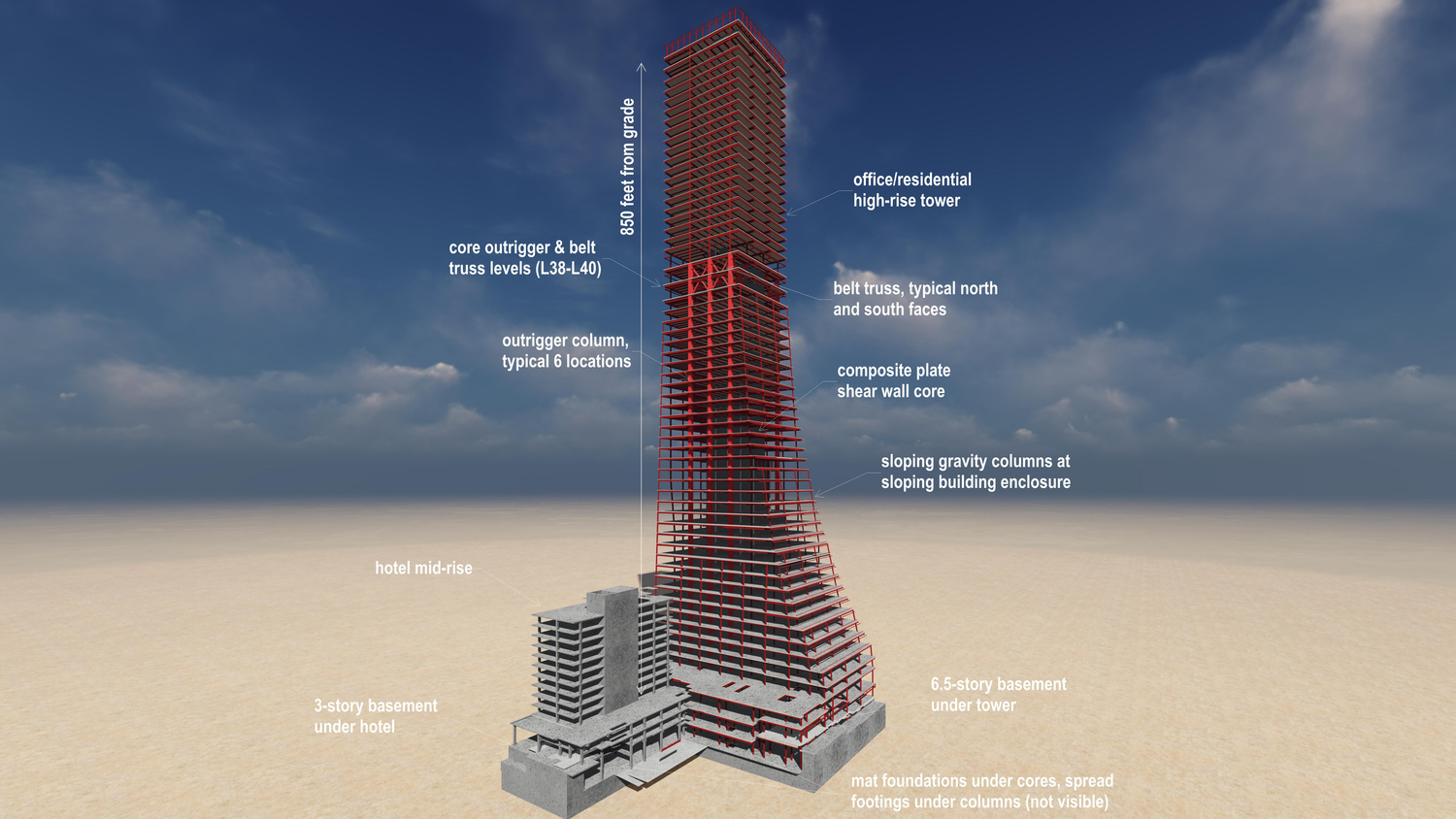
After the approvals and obtaining the construction permit, we will start the construction activity of the site clearance. At this stage, we remove all the unevenness of the land and debris and natural or artificial obstacles from the construction site because they can hinder the construction process. We do the process of cleaning the area and digging simultaneously. The Construction of a high-rise project begins with a deep excavation. The boundaries of which are mainly supported by the installation of piles. They are temporary vertical structural elements that can reach up to 100 feet below ground level. After the excavation is complete, we replace the piles with more muscular retaining walls, usually constructed with a clever combination of steel and concrete as well as other vital materials to withstand the construction loads of the structure's foundation work.
Stage #5: Pouring a solid foundation
When the cleaning and digging process is completed successfully, we pour the foundation of the building. We measure the strength of a large-scale construction project based on its size as well as the stability of the land. The weight of the structure under Construction increases non-linearly with height, which is why skyscrapers are built with fixed stone foundations. Creating a solid stone foundation and bringing it to the ground level is one of the most challenging steps in constructing a high-rise building.
Stage # 6: Building the gray structure
Once the foundation of a high-rise is successfully poured, we begin the Construction of the main framework of the building. At this stage, the gray structure is made with a combination of structural members such as columns, beams and slabs of different materials such as steel and reinforced cement concrete. It is a critical phase that primarily sets the basic framework for other structural aspects of a project under Construction. If all goes according to plan, the entire framing process may only take a short time, and we can easily repeat it for multi-story buildings with identical layouts.
Stage #7: Installation of mechanical, electrical and plumbing equipment (MEP)
After the gray structure of the building is completed, the MEP work begins. This stage includes installing mechanical, electrical and plumbing equipment, including firefighting systems, distribution systems and HVAC facilities, electrical posts and wires, sanitary pipes, electrical outlets and lighting connections.
Once the electrical and plumbing are complete and the top floor of an elevated structure (the roof of the building) is finished, we install indoor air conditioning systems to meet indoor heating and cooling needs. This system may be placed on the top, depending on the design. The process may also include insulating walls and ceilings to increase the effectiveness of indoor air conditioning systems.
Stage #8: Completing the interior space and installing devices (final step)
One of the last and most important stages of a high-rise construction project includes interior finishing and installation of fixtures. Various types of contemporary fixtures made of wood, wrought iron, and glass are installed to create decoration in today's buildings. However, the installation of modern architectural elements may vary from project to project.
This construction phase also includes installing necessary functional devices such as windows, doors, counters, wall closets, cabinets, escalators (if needed), lighting devices, and, most importantly, elevators. The finalization of the completion phase means that the high-rise construction project is complete, and the skyscraper is all set to dominate the surrounding metropolitan skyline.
Note: Heavy construction machinery is also integral to a high-rise project. We use them for drilling, transporting raw materials to construction sites, and transporting heavy loads to the upper floors of projects, among many other uses.
Now we introduced you to all the steps of high-rise construction and showed you that a high-rise structure could be very safe and beautiful if it is built on the correct basis and takes little time to make. Happy Construction has provided you with complete information about the Construction of high-rise buildings. For more information on the structure and renovation of all residential and commercial buildings, visit the Happy Construction Company blog or call our expert consultants for free.